Our policy position on ending illegal small-scale mining's damage to Ghana's land, water and farming communities, and what needs to change.
Illegal mining, locally known as galamsey, has poisoned rivers, destroyed farmland and undermined legitimate small-scale miners across Ghana's mining regions. Enforcement has over the years targeted the laborers and left out the key and most important enabler in the equation, undiscussed- Landowners. This paper sets out where the current response is falling short and what a more effective one would look like.
Task force operations are ad-hoc. The force strength is limited. This makes it hard for them to be everywhere illegal mining is happening.
Many miners turn to galamsey because legal licensing is slow, costly or inaccessible. Simplifying licensing and expanding designated mining zones would reduce the incentive to mine illegally.
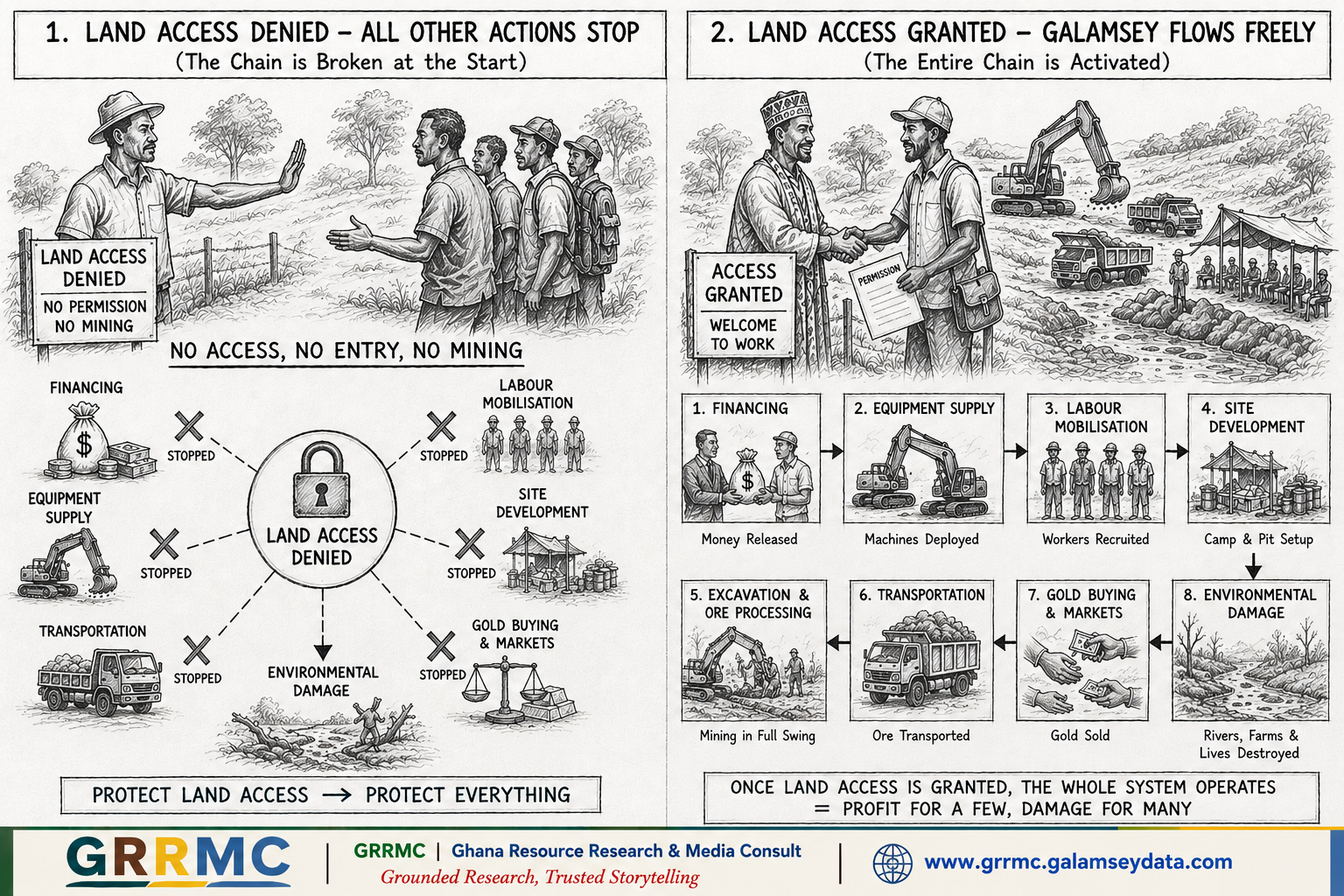
When landowners deny access, the entire illegal mining chain -- financing, equipment, labour, site development, gold sales -- stops before it starts. Land access is the single prevention gate that protects everything downstream.
Download the full policy papers we've published on this issue.
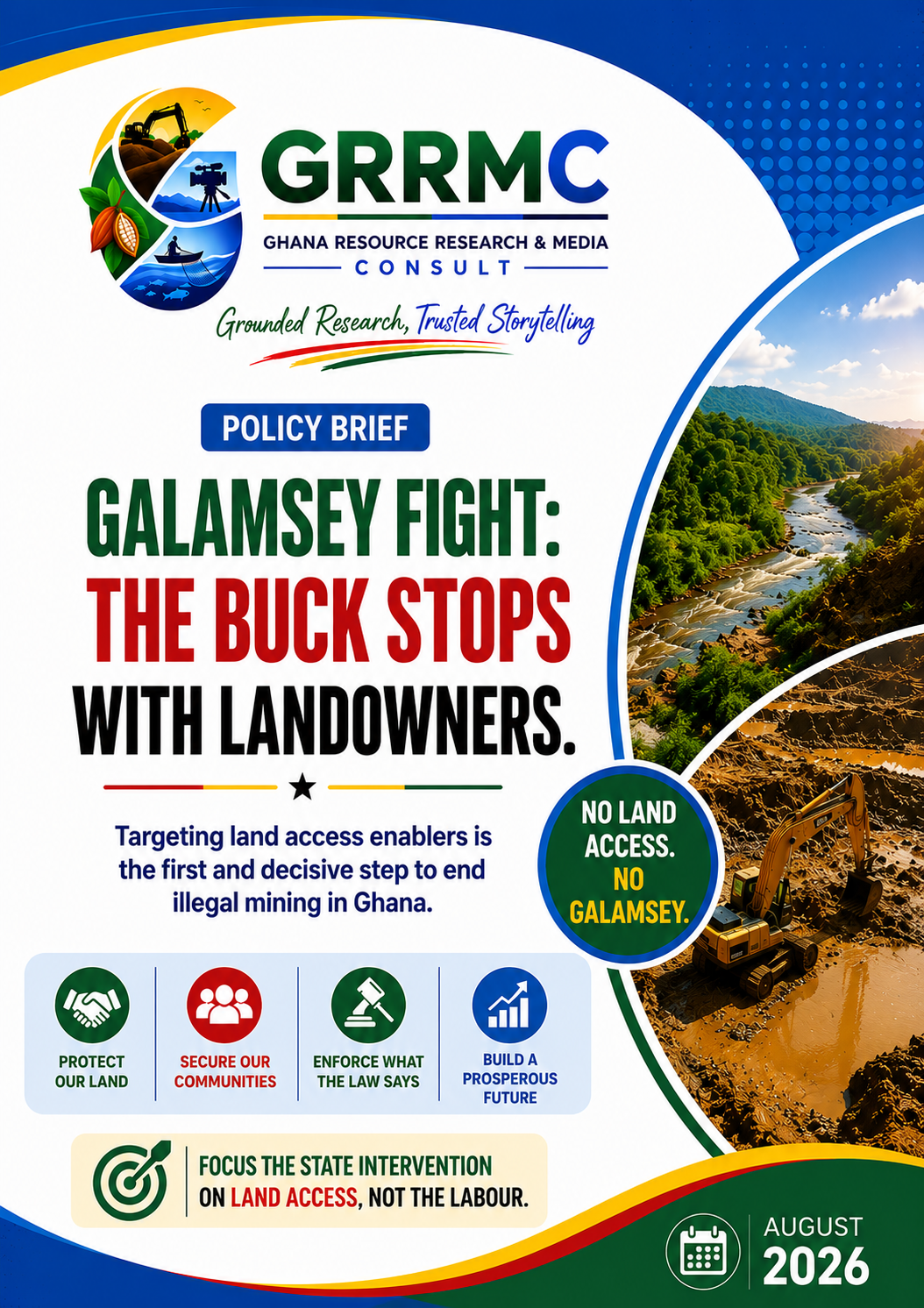
We argue for a fundamental shift in Ghana’s fight against illegal mining: target the land-access enablers who make galamsey possible in the first place. We examine why enforcement focused mainly on laborers has failed to stop recurring operations and proposes a land-first strategy that combines accountability for those who knowingly enable illegal mining with stronger economic incentives for landowners to retain gold-bearing lands for cocoa farming, conservation and other lawful productive uses.
No documents published under Galamsey Fight yet — check back soon.
Get in touch with our research team, or explore our other policy positions.